


Last Updated: 6th July 2026
Written by Shaun, Managing Director and co-founder of Departure Pets – with lifelong experience in animal care and formal qualifications in animal handling and behaviour.
Why do some pets struggle with travel – and what can you do about it?
Key Takeaways
- Travel anxiety in pets is common and can be triggered by separation, unfamiliar environments, noise, or motion
- Crate training well before the travel date is one of the most effective things you can do to reduce stress on the day
- A blanket or towel with your scent is permitted inside the crate and can provide real comfort during the flight
- Natural calming products such as Pet Relief’s Comfort and Calm blend can help support anxious pets without sedation
- If your pet has clinical anxiety, speak to your vet before travel for tailored advice – never administer sedatives without veterinary guidance
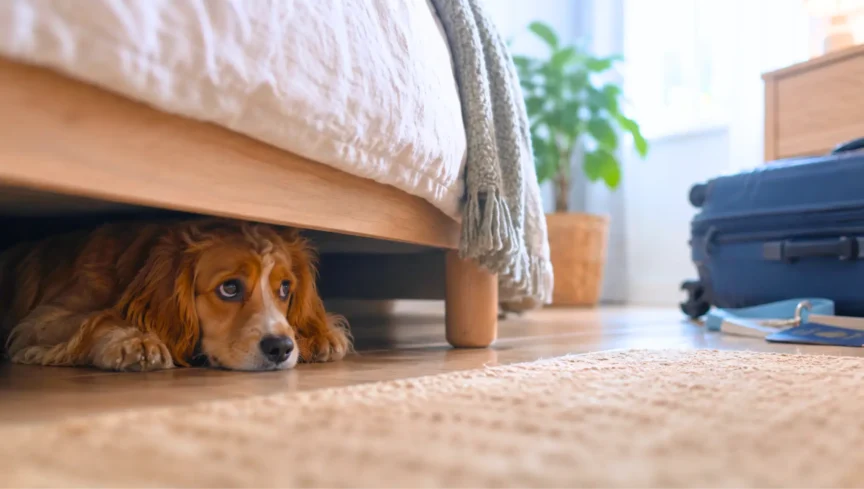
It’s completely normal to feel anxious about your pet travelling, and it’s just as normal for your pet to feel a little unsettled too. Many pets experience some degree of travel anxiety – triggered by separation from their owners, unfamiliar environments, loud noises, motion, or simply the disruption to their routine.
The good news is that with the right preparation, you can make a real difference to how your pet experiences the journey. Here’s what we recommend.
Crate training before travelling for a calm journey
Crate training is one of the single most effective things you can do to reduce your pet’s travel anxiety. The goal is simple – you want your pet to see the crate as a safe, familiar space, not something associated only with vet trips or stressful events.
Start early. In the weeks before travel, introduce the travel crate gradually and build positive associations with it. Add bedding, reward calm behaviour around it, and let your pet explore it at their own pace. There’s no rushing this process – slow and steady is the right approach.
When it comes to crate size, comfort and safety both matter. The crate needs to be large enough for your pet to stand up, turn around, sit, and lie down comfortably – but not so large that they are thrown around during turbulence. Our how to size your pet guide walks you through the process, and our team is always happy to help match your pet to the right size.
Comfort items allowed during travel
Airlines don’t permit loose toys, beds, or objects inside the travel crate – but there is still plenty you can do to make the space feel familiar and reassuring.
Placing an old blanket or towel flat in the bottom of the crate is both permitted and encouraged. It provides softness, absorbs any accidents during the flight, and – if you sleep with it for a few nights before travel – it will carry your scent, which can be genuinely calming for your pet during the journey.
Keep in mind that anything placed inside the crate should be something you’re happy to part with. If it gets soiled during the flight, it will need to be discarded on arrival. Avoid putting anything valuable or sentimental in there.
Natural calming products for pets when travelling
For pets that need a little extra support, natural calming products can be a helpful addition to your preparation routine.
One product we recommend is Pet Relief’s Comfort and Calm blend – an Australian-owned product made with 100% natural ingredients including Australian Bush Flower Essences, vegetable glycerin, and spring water. It’s been developed specifically to support pets experiencing anxiety, separation stress, fear of loud noises, and motion sickness, and is safe for dogs, cats, birds, horses, and rabbits.
Pet Relief’s blends work through vibrational energetics, helping the body return to a state of balance without side effects. They are also safe to use alongside other natural or pharmaceutical treatments, making them a flexible option for most pets.
Your pet might be anxious because you are anxious!
Your pet feels what you feel. This one is easy to overlook but it matters a lot. Pets are highly attuned to their owner’s emotional state, and research has shown that stress and anxiety can be genuinely contagious between owners and their animals – pets can pick up on physiological and chemical cues that cause their owner’s mood to become their own.
In the lead-up to travel, the most helpful thing you can do is stay calm and relaxed around your pet. A confident, settled presence from you will give your pet a much better foundation for handling the transition to an unfamiliar environment. If you’re not stressed, they’re far less likely to be stressed either.
When to speak to your vet about pet travel anxiety?
If your pet has clinical anxiety or any special care needs, speak to your vet before travel. They can recommend a tailored approach – from behavioural strategies through to appropriate medication – based on your pet’s specific history and needs.
It’s also worth noting that sedation is not permitted for domestic pet flights unless specifically recommended by a vet with supporting documentation. Sedatives affect heart rate, breathing, and your pet’s ability to physically adjust to changes in altitude and pressure during the flight – which poses a real safety risk. If you are concerned about how your pet will cope, your vet is the right starting point for advice.
Learn more about our Domestic Pet Travel services and the Australian ports that we fly cats and dogs to and from, including:
- Pet Transport Brisbane
- Pet Transport Melbourne
- Pet Transport Sydney
- Pet Transport Perth
- Pet Transport Darwin
- Pet Transport Canberra
- Pet Transport Adelaide
- Pet Transport Hobart
If you’re looking for International Pet Travel, we can help with that too.
Ready to Book Domestic Pet Travel within Australia?
Your pet’s welfare is our top priority, and we take every measure to ensure they arrive home safely and happily. Get in touch with our team today to arrange safe and stress-free domestic pet transport.
- Request a Domestic Pet Transport Quote
- Request an International Pet Transport Quote
- NZ to AUS International Pet TransportQuote
Further Reading:
- What happens to my pet after their domestic flight?
- Managing Pet Travel Anxiety – Tips for a Calmer Journey
- Is Pet Travel Safe? All you need to know about your pets domestic journey
- The Pet Check-In Process for Domestic Pet Travel within Australia
- How cold weather affects pet air travel in Australia
- Is it safe for cats and dogs to fly in cargo?
FAQs on Pet Travel Anxiety
How do I calm my dog or cat before a flight in Australia?
The most effective approach is to start crate training well before the travel date so your pet feels safe and comfortable in their crate.
On the day, a familiar-smelling blanket in the bottom of the crate can help, and staying calm yourself makes a real difference – pets pick up on their owner’s emotional state. For extra support, natural calming products such as Pet Relief’s Comfort and Calm blend can be used safely without sedation. If your pet has clinical anxiety, speak to your vet before travel.
Can I give my pet something to calm them down for a flight?
Sedatives are not permitted for domestic pet flights in Australia unless a vet has specifically recommended them with supporting documentation.
There are, however, natural calming options available. Pet Relief’s Comfort and Calm blend is one product we recommend – it uses 100% natural ingredients and is designed to support pets experiencing travel anxiety, without side effects or the risks associated with sedation.
Does crate training help with pet travel anxiety?
Yes – crate training is one of the most effective ways to reduce travel anxiety in pets. Introducing the crate gradually in the weeks before travel and building positive associations with it helps your pet see it as a safe, familiar space rather than something unfamiliar or stressful.
Combined with familiar scents and a calm owner, it can make a significant difference to how your pet copes on the day.
What can I put in my pet’s crate to help with anxiety during a flight?
You can place a thin old blanket or towel in the bottom of the crate – ideally one that you’ve slept with beforehand so it carries your scent.
Loose toys, beds, collars, and other objects are not permitted by the airlines due to safety reasons. Avoid placing anything valuable in the crate, as soiled items will be discarded on arrival.
How do I know if my pet needs veterinary advice before flying?
If your pet has a history of clinical anxiety, is on regular medication, has a health condition, or is very young (under 12 weeks), older (over 12 years), or belongs to a brachycephalic breed, we strongly recommend speaking to your vet before booking travel. Your vet can advise on the best preparation strategy for your specific pet and confirm whether a Fit to Fly certificate will be required for the journey.
Airline policies, government regulations and industry requirements can change over time. This article reflects information current as of the date above. For the latest requirements specific to your pet’s journey, please contact your Departure Pets consultant.